Failed Knee Replacement

Painful Knee Replacement

Knee replacement surgery is often a life-changing operation that helps relieve pain, improve movement, and restore your quality of life.
However, a small number of people may continue to experience pain, stiffness, or swelling after surgery. This can happen for several reasons, such as infection, implant loosening, inflammation, or issues with alignment.

In some cases, when the original knee replacement is not functioning as it should, a revision knee replacement may be recommended.
This involves replacing part or all of the original implant to help restore comfort, mobility, and confidence in your knee.

Causes of a Painful Knee Replacement:

Most people recover well after knee replacement surgery and enjoy lasting relief from pain. However, a small number of patients may continue to experience discomfort or stiffness in the knee.

This can happen for a variety of reasons, including:

Infection: Bacteria can sometimes cause an infection around the knee implant, leading to pain, swelling, or warmth.
Implant loosening or wear: Over time, the artificial parts can loosen or wear out, resulting in pain or a feeling of instability.
Stiffness or scar tissue: Excessive scar tissue may limit movement and cause discomfort when bending or straightening the knee.
Alignment or balance issues: If the components are slightly out of position, this can affect how the knee moves and feels.
Instability: The ligaments around the knee may become stretched or weak, causing the knee to feel unstable.
Soft tissue irritation: Muscles, tendons, or ligaments around the knee can become inflamed, leading to pain with movement.
Referred pain: Occasionally, pain may come from another area such as the hip or lower back rather than the knee itself.

If you are experiencing ongoing pain after knee replacement surgery, it’s advisable to have your knee assessed. In most cases, the cause can be identified and managed successfully.


Painful Knee Replacement FAQs

The most common symptoms associated with loosening or instability include:

  • pain
  • popping or clicking sound
  •  sensation that your joint is moving in and out of its socket
  • sensation of your knee ‘giving out’
  • swelling in and around your knee

Symptoms of an infection include:

  • pain
  • redness
  • swelling
  • instability
  • wounds that do not heal

Mr Sulaiman Alazzawi will take a full medical history and note of your symptoms and perform a physical examination. He will also order X-rays and other imaging tests to establish the cause of the failure. Mr Alazzawi can then advise you whether revision knee surgery is the appropriate treatment and explain the benefits and potential risks.

Revision knee surgery will repair any damage from a painful knee replacement and will vary depending on the reason why the initial replacement is causing pain. If the implant is loosened, Mr Alazzawi might secure the initial implant or replace it if the implant has suffered too much wear.

If there has been an infection, Mr Alazzawi may have to remove the new prosthesis and treat you with lengthy course of intravenous antibiotics before redoing the procedure.

Revision knee replacement surgery is typically more challenging than the initial procedure and Mr Alazzawi works within a multidisciplinary team that is highly experienced in dealing with all aspects of failed joint replacement. Patients typically experience the following benefits:

  • Increased mobility
  • Reduced pain
  • Improved joint function
  • Improved quality of life
  • High satisfaction and success rate

Leading Hip & Knee Joint Replacement Specialist

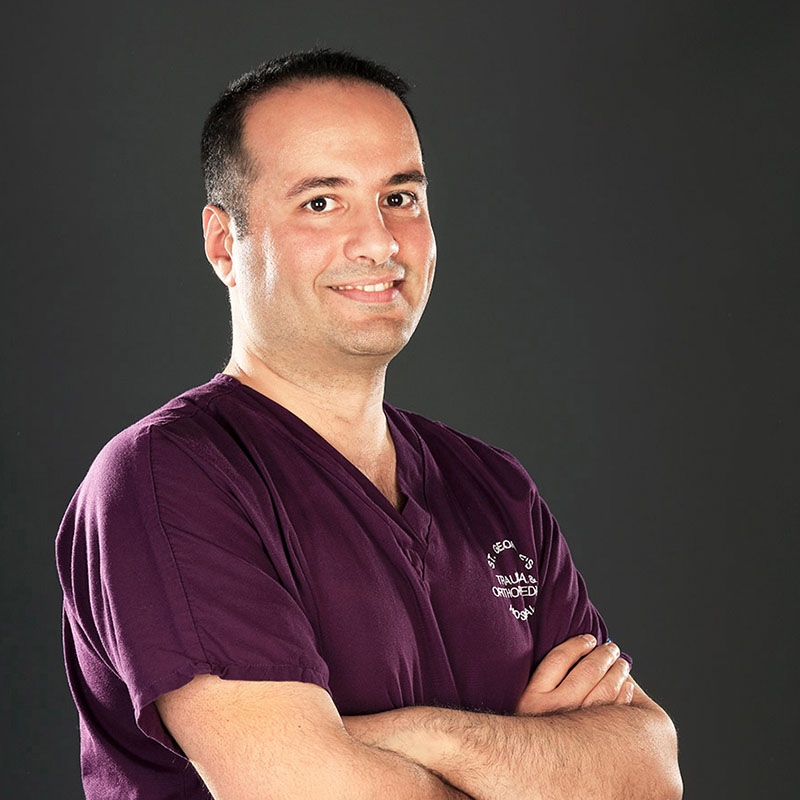
Mr Sulaiman Alazzawi is a Consultant Orthopaedic and Trauma Surgeon based at St Georges University Hospital and the South West Elective Orthopaedic Centre in Epsom. He specialises in hip and knee replacements and treating painful or failing joint replacements. His private practice is based at Fortius Clinic and Parkside Hospital in Wimbledon and Spire St Anthony’s Hospital in Sutton.

London Joint Replacement Specialist