Advantages of Mako Robotic Joint Replacement
Hip and knee replacements are life-transforming surgical procedures, and according to the latest figures from the UK National Joint Registry (NJR), there are almost 85,000 primary hip replacements and 79,000 primary knee replacements performed annually.
Hip replacements generally result in very high satisfaction rates, with 95% of hip replacement patients feeling their symptoms were improved and 93% describing their results as either excellent, very good or good.
Ninety per cent of knee replacement patients felt their problems were better than before their operation and 87% of them thought their results were either excellent, very good or good.
Continuous efforts are being made to enhance learning and refine techniques and tools to ensure optimal patient outcomes. Achieving precise component positioning, particularly in knee replacements, can be challenging using conventional methods, and improvements in this aspect are believed to positively impact results.
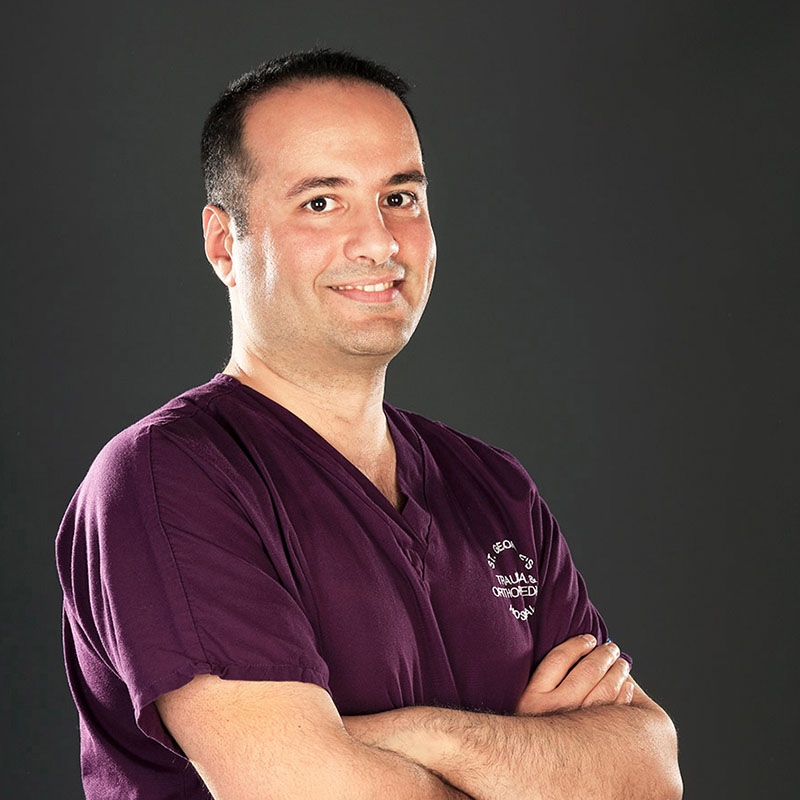
The advent of robotic-assisted hip and knee replacements represents a recent development aimed at enhancing surgical accuracy. London hip and knee replacement surgeon, Mr Sulaiman Alazzawi offers Mako robotic-assisted procedures, which provide a greater ability to tailor surgeries to individual patient needs through meticulous planning and execution.
Robotic-assisted joint replacement surgery doesn’t diminish surgeons’ skills; rather, it assists them in achieving greater surgical accuracy, directly influencing outcomes.
Advantages of Mako Total Knee Replacement: This technology offers several advantages, as confirmed by recent clinical studies comparing manual and robotic-assisted surgeries. These benefits include:
- Improved accuracy in component positioning
- Reduced postoperative pain and decreased reliance on strong pain relief
- Minimised need for physiotherapy
- Shorter hospital stays
- Lower readmission rates
- Enhanced knee joint mobility
- Reduced soft tissue damage
Mako Total Hip Replacement Advantages: This procedure offers numerous advantages over conventional techniques:
- More accurate positioning of the acetabular component
- Precise restoration of correct leg length
- Improved overall function
Achieving the correct leg length and restoring the normal relationship between the thigh and pelvis contribute to better muscle function, leading to patients experiencing a hip that feels as good as their own.
Moreover, the enhanced accuracy provided by robotic-assisted surgery is expected to result in a lower risk of instability by improving alignment and reducing wear and tear, thereby increasing the longevity of the joint.