Partial Knee Replacement

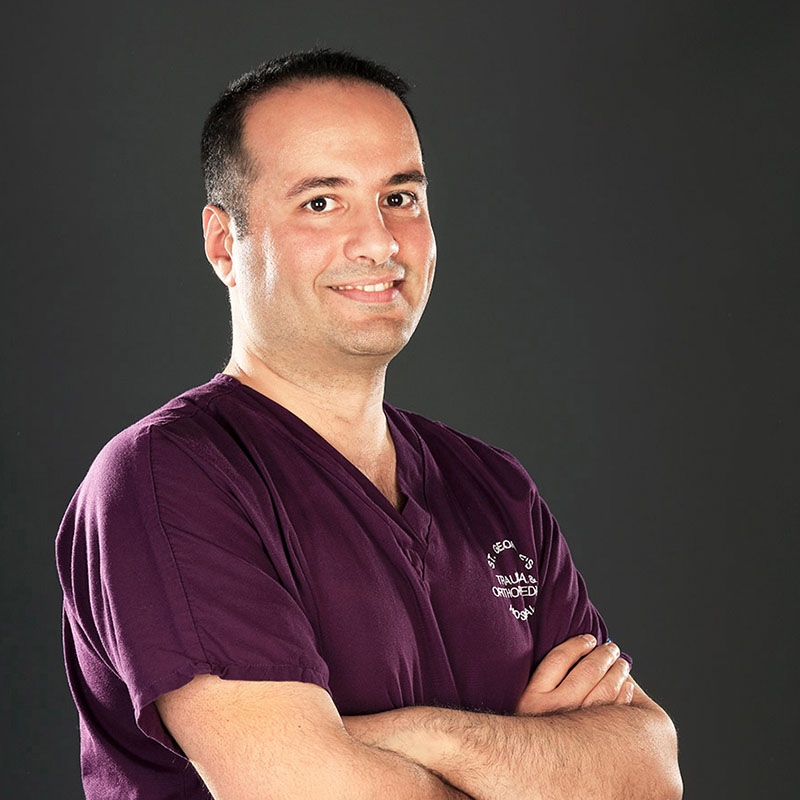
Partial Knee Replacement Surgery with Mr Sulaiman Alazzawi

For patients with arthritis limited to one part of the knee, a partial knee replacement can be an excellent alternative to a total knee replacement. Unlike a full replacement, this procedure resurfaces only the damaged portion of the joint, leaving the healthy bone, cartilage, and ligaments intact.

What are the benefits of a partial knee replacement?

Many patients experience quicker recovery, less pain after surgery, and a more “natural” feeling knee compared to a total knee replacement. Because less bone and tissue are removed, patients often regain function faster and return to their daily activities sooner.

Partial knee replacement isn’t right for everyone. It works best for patients with arthritis confined to a single knee compartment, good range of motion, and stable ligaments. A careful assessment, including clinical examination and imaging, helps determine whether this option is suitable.

If you’re struggling with knee pain but want to explore less invasive solutions, a consultation can help you find the treatment that best fits your lifestyle and goals.


Partial Knee Replacement FAQs

Partial knee replacement is suitable when arthritis or cartilage damage is confined to just one of the knee’s three compartments (medial, lateral, or patellofemoral), rather than affecting the whole joint. It also depends on having reasonably good range of motion and stable ligaments. If arthritis is present across multiple compartments or the knee is unstable, a total knee replacement is usually the safer and more effective option.

A thorough assessment with imaging and clinical examination is the only reliable way to determine which procedure is right for you.

A partial knee replacement only removes and resurfaces the damaged part of the joint, leaving the healthy bone, cartilage, and ligaments untouched. A total knee replacement replaces the whole joint. Because less tissue is disturbed, partial knee replacement typically involves a smaller incision, a more ‘natural’ feeling knee, and less post-operative pain for many patients. However, it isn’t right for everyone, and some patients who start with a partial replacement may eventually need a total replacement if arthritis develops in the other compartments later on.

Recovery is generally faster than after a total knee replacement, although every patient’s journey is different. Many patients are up and walking with crutches or a frame the day after surgery, progressing to a stick within a short time, and often moving more independently within two to three weeks.

Physiotherapy is central to rebuilding strength and movement, and because the surgery is less invasive, muscles and soft tissue tend to heal more quickly. Low-impact activities such as swimming, cycling, and brisk walking can usually be reintroduced within a few months, though timelines vary from patient to patient.

Yes. Mr Alazzawi uses Mako robotic-assisted technology for suitable partial knee replacement patients. Before surgery, 3D imaging is used to build a detailed map of the knee, and the Mako system uses this to guide the surgical instruments with millimetre precision during the operation. The robot doesn’t perform the surgery. Mr Alazzawi remains in full control throughout, with the technology supporting accurate implant alignment and reduced soft tissue disruption, which can contribute to a quicker recovery.

Leading Hip & Knee Joint Replacement Specialist

Mr Sulaiman Alazzawi is a Consultant Orthopaedic and Trauma Surgeon based at St Georges University Hospital and the South West Elective Orthopaedic Centre in Epsom. He specialises in hip and knee replacements and treating painful or failing joint replacements. His private practice is based at Fortius Clinic and Parkside Hospital in Wimbledon and Spire St Anthony’s Hospital in Sutton.

London Joint Replacement Specialist